
The Problem No One Is Calculating
Industry estimates put fabric wastage at 5–8% of total production volume — cutting room offcuts, sampling waste, and surplus stock that never moves. On a fabric spend of ₹ 1 crore per season, that is ₹ 5–8 lakhs quietly disappearing every season.
Over four seasons: ₹ 20 lakhs or more of stranded capital.
This is not a sustainability problem. It is a profitability problem — and it has a sourcing solution.
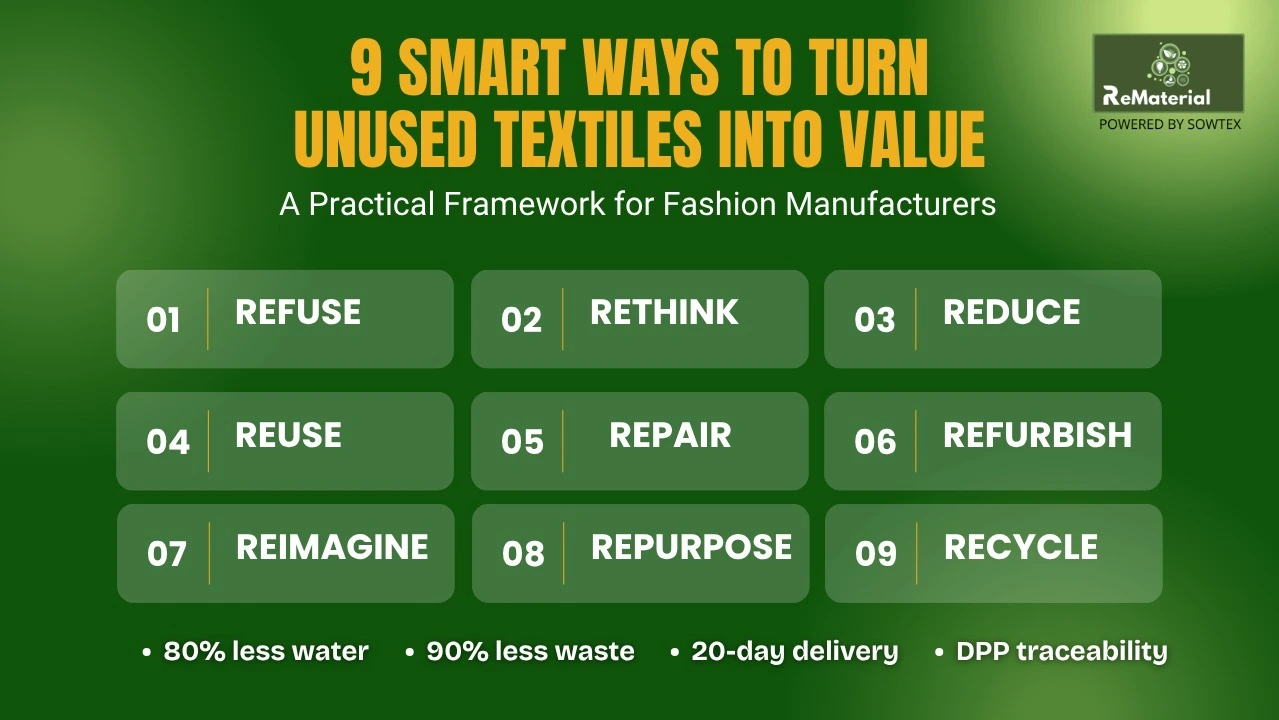
At ReMaterial by Sowtex, we call it the 9 Rs of Circular Textile Sourcing.
The 9 Rs — What They Mean in Practice
01 Refuse – Skip fresh mill orders when certified ready stock is available. Faster, cheaper, and fully compliant.
02 Rethink – Design around available fabric in your warehouse or ready stock, not future projections.
03 Reduce – Order only what production needs. No excess, no buffers, no unnecessary waste.
04 Reuse – List surplus fabric on ReMaterial and turn deadstock into sellable inventory.
05 Repair – Recover defective fabric through mending or re-cutting before discarding it.
06 Refurbish – Re-dye and finish unsold stock to give it new commercial value.
07 Reimagine – Transform cutting scraps into new upcycled fabrics with added buyer appeal.
08 Repurpose – Convert surplus fabric into bags, home products, or limited-edition collections.
09 Recycle – Use certified textile recycling to turn waste into GRS-certified raw fibre.
The Commercial Case
Fashion manufacturers implementing even three of the nine steps consistently report:
Where to Start
Do not attempt all nine at once.
Start with 01 Refuse. Before your next mill order, check whether certified ready stock is available on ReMaterial. This single habit change is where most manufacturers find their first 15–20% cost saving.

Join thousands of verified mills, garment manufacturers, exporters & global textile buyers.
Choose your preferred sign-in method to access your B2B sourcing dashboard.