
The Ground Reality: The
Sustainability Standard
India’s global edge has always been the master artisan. But as
Honble Minister Piyush Goyal challenged textile clusters to create 5 lakh new
jobs and double exports by 2029, intuition is no longer enough. To lead in the
2.4 trillion global fashion market, we need data backed craftsmanship. The
Clothing Manufacturers Association of India (CMAI) has set the pace with
Project SURE (Sustainable Resolution). In 2026, skilling means the ability to
prove sustainability through every stitch, transforming the Surat cluster into
a hub for traceable, international standard production.
The Conflict: Breaking the Black Box Fear
On the shop floor, a traceability tablet often feels like a
digital spy. This fear fuels the Chalta Hai Tax, where data is obscured to
avoid accountability.
The Pivot
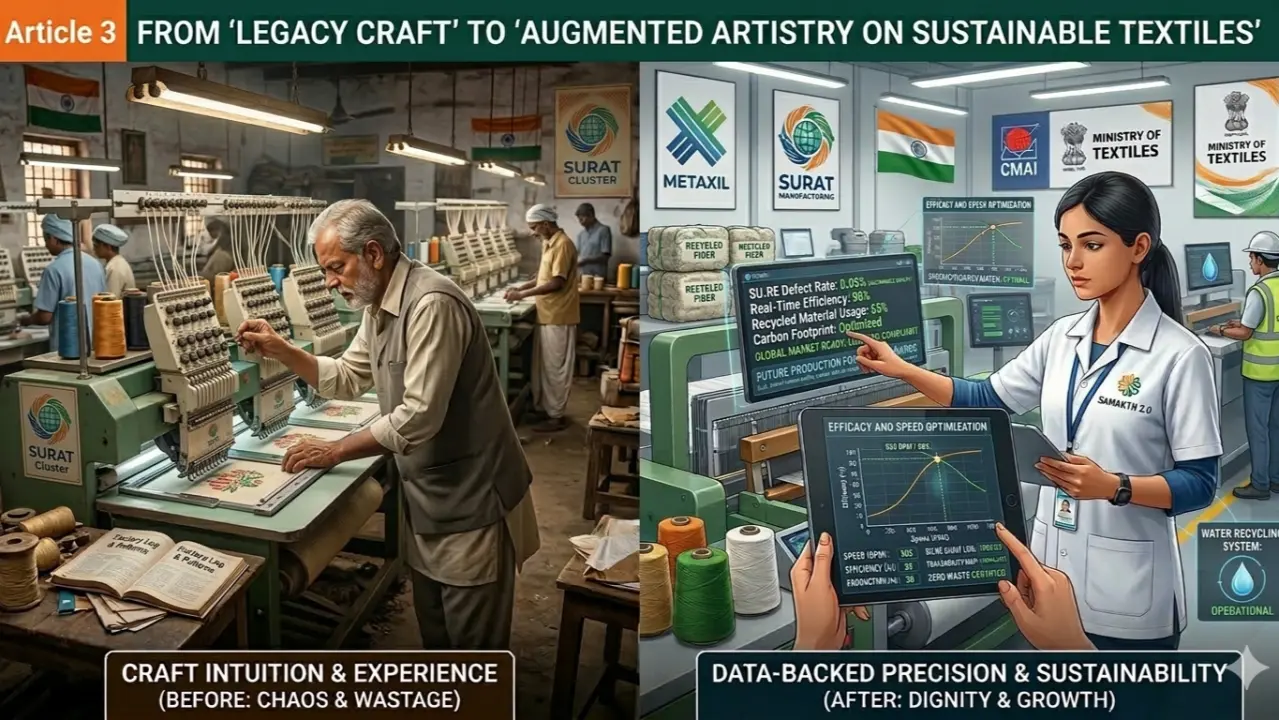
As seen in our visual, technology is not
replacing the worker. It is the tool that validates their artistry. When a
worker uses a tablet to log a batch, they are not just reporting, they are
certifying their craft for global eco conscious buyers.
The 2026 Solution: Samarth 2.0 and the SURE Manifesto
Under the Union Budget 2026 to 2027, the
Samarth 2.0 and SOAR programs are training workers to meet the five pillars of
SURE, with a strong focus on sourcing and traceability.
1.
Sourcing certified materials
Workers are being trained to use platforms like CMAI Fab Show, TFI Show, and
SOWTEX to source from over 600 verified eco friendly vendors. By using a
digital sourcing compass, SMEs can find GRS, organic, or RCS certified
materials and ensure production starts with green raw inputs.
2.
Traceable supply chains
Using platforms like ReMaterial, Fabriclore, and Fabrito, factories can
optimize material usage and track ready stock. This ensures that certified
materials are not just labels but are tracked through vendor profiles and
globally recognized certifications.
3.
No code AI training
Master weavers should become AI trainers. They can translate SOPs and physical
operating experience into AI systems that detect defects and meet SURE audit
standards. This preserves decades of expertise in a digital format that global
brands demand.
4.
The transparency dividend
Aligned with new labour codes, digital records of high efficiency are not just
for management but also empower workers with performance based incentives. Data
becomes dignity.
A Call to Action for Industry Leaders
To Rahul Mehta CMAI, Dr A Sakthivel AEPC, KM
Subramanian TEA, Shaleen Toshniwal MATEXIL, and Lalit Thukral NAEC: The
hardware is here through the TEEM scheme. The vision is here through SURE. The
sourcing tech architecture is already being built through textile focused B2B
platforms like SOWTEX and Fabrito. Now we need the human software upgrade to
perform the right tasks.
We urge the Ministry of Textiles to
incentivize digital literacy on site. As we move toward the CMAI Fab Show 2026
this April, let the sustainability conclave showcase supply chain partners who
are Samarth 2.0 ready and SURE certified.
The Bottom Line
We
are not replacing the artisan, we are empowering them with a digital compass.
The future of Make in India is a worker with a tablet, a sensor, and a SURE
commitment to global excellence.